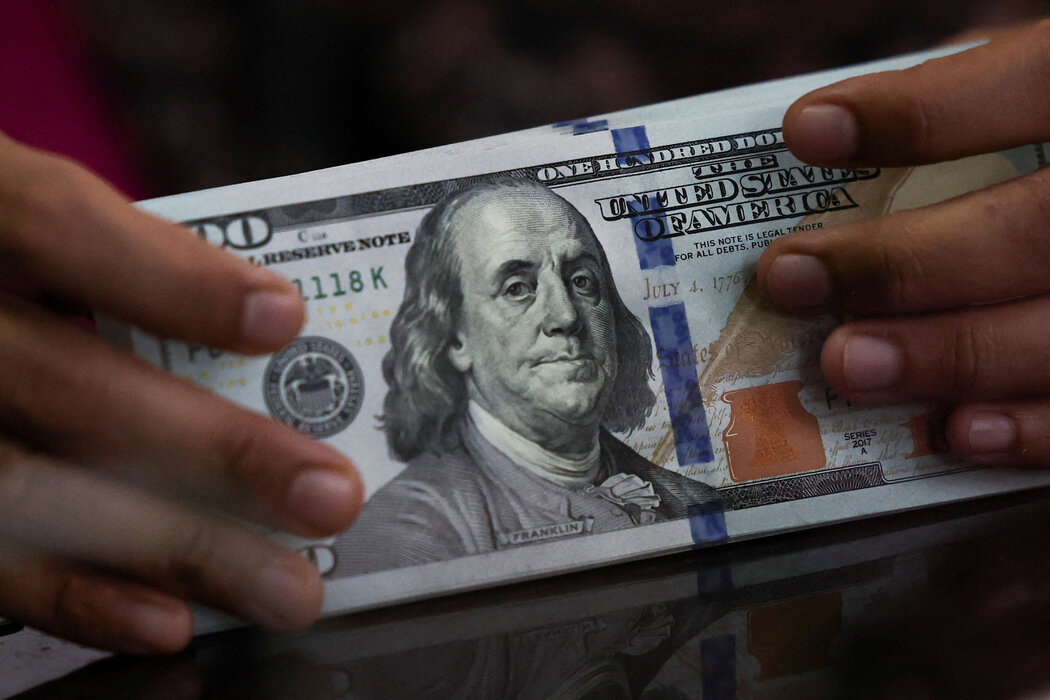
Why the US Dollar Is a Core Variable in the Global Financial System
The reason the US dollar has long influenced global exchange rates, capital flows and asset prices is not only the large size of the US economy, but also the fact that the dollar simultaneously serves multiple functions, including reserve currency, trade settlement currency, financing currency and safe-haven asset vehicle. Foreign exchange trading, orFX, is essentially the relative pricing between two currencies. When one of those currencies is the world’s main reserve currency, its movements affect more assets and economies.
TheBretton Woods System, formed after World War II, pegged the US dollar to gold and other major currencies to the US dollar, establishing the dollar’s international central role at the institutional level. After the fixed convertibility between the dollar and gold ended in 1971, the dollar no longer relied on the gold standard to maintain its position. Instead, it continued to play a core role through the depth of the US Treasury market, the dollar payment network, the liquidity of the US financial system and global institutional demand for dollar assets.
This status of the dollar has a network effect. The more countries and institutions use the dollar for reserves, trade and financing, the deeper and more liquid the dollar market becomes; the higher the liquidity, the more institutions tend to continue using the dollar. For this reason, even though the dollar’s share of global reserves has slowly declined over the long term, it still maintains a clear lead.
| Comparison Dimension | Key Parameter | Applicable Scenario | Main Risk |
|---|---|---|---|
| Reserve Currency | Around 56% to 57% of global foreign exchange reserves | Central bank foreign exchange reserve allocation | Dollar depreciation affects the valuation of reserve assets |
| Settlement Currency | Widely used in international trade and commodity pricing | Energy, raw materials and cross-border contracts | Non-dollar economies face exchange rate conversion risk |
| Financing Currency | Large markets for dollar loans, dollar bonds and dollar swaps | Corporate financing and cross-border capital markets | Rising dollar interest rates increase debt servicing pressure |
| Safe-Haven Asset Vehicle | US Treasuries and dollar cash instruments have high liquidity | Periods of financial stress or liquidity contraction | Safe-haven flows may reduce liquidity in other markets |
Why the Dollar Index Cannot Simply Be Equated with Global Dollar Strength
The US Dollar Index, orDXY, is a common market indicator for observing dollar strength. It tracks changes in the US dollar against the euro, Japanese yen, British pound, Canadian dollar, Swedish krona and Swiss franc, with 1973 as the base year. The index uses fixed weights, with the euro accounting for about 57.6%. As a result, DXY movements are heavily influenced by the relationship between the US dollar and the euro.
DXY’s advantages are its long historical series, high market recognition and usefulness in observing the dollar’s direction against major developed-market currencies. Its limitations are also clear: it does not directly cover the Chinese yuan, Korean won, Indian rupee, Mexican peso or other emerging-market currencies. Therefore, when studying global trade, supply chains and emerging-market capital flows, DXY should be used together with broader trade-weighted dollar indices, cross-border capital flow data and local bond yields.
Why the Euro Weight Matters
Since the euro has the highest weight in DXY, changes in EUR/USD often have a significant impact on the index direction. If the euro weakens due to slower European growth or widening interest rate differentials, DXY may rise; if the European economy improves or eurozone interest rate expectations move higher, DXY may come under pressure. This shows that DXY is not only the result of dollar-specific factors, but also the result of relative performance between the United States and other major economies.
The Theoretical Basis of Interest Rate Differentials and the Dollar Cycle
The dollar’s movement is closely linked to interest rate differentials. Uncovered interest rate parity theory holds that, under ideal conditions with no risk premium or capital restrictions, interest rate differentials between two countries should be compensated by expected exchange rate changes. Real markets do not fully satisfy these assumptions, but interest rate differentials remain an important variable in analyzing the dollar cycle.
When US interest rates rise relative to those of other economies, the yield on dollar assets may increase, and global capital may allocate more to dollar bonds, dollar money market instruments and US equities. Conversely, when the US interest rate advantage narrows, the relative appeal of dollar assets may decline, and capital may flow into other high-yielding currencies or risk assets.
The Federal Open Market Committee, orFOMC, influences market expectations through the federal funds rate target range, policy statements, meeting minutes and economic projections. The foreign exchange market usually trades not only policy changes that have already occurred, but also expectations for the policy path over the next 3 to 12 months.
The Triffin Dilemma and the Dollar’s Long-Term Contradiction
TheTriffin Dilemma, proposed by Robert Triffin in 1960, points out that as the issuer of the international reserve currency, the United States needs to provide sufficient dollar liquidity to the world, but providing liquidity over the long term may be accompanied by current account deficits and credit constraints. This contradiction explains the structural tension in the dollar’s international role: the world needs dollars, but excessive dollar supply may raise concerns about the value of the dollar and the sustainability of US public finances.
This theory does not mean the dollar’s status will end quickly. Instead, it reminds analysts that the dollar cycle is influenced not only by short-term interest rates, but also by US fiscal conditions, the balance of payments, global dollar financing demand and the development of alternative currency systems.
Transmission Channels Between the Dollar, Commodities, Emerging Markets and US Trade
The dollar cycle affects global markets through several channels. The first is the commodity pricing channel. Commodities such as gold, crude oil and copper are mostly priced in dollars. When the dollar strengthens, non-dollar buyers need to pay more in local currency for the same commodities, which may weaken demand. When the dollar weakens, commodity prices may receive exchange rate support, but they are still affected by supply and demand, inventories and geopolitical events.
The second is the emerging-market capital channel. Many emerging-market companies and governments have dollar-denominated debt. A stronger dollar and higher dollar interest rates increase debt servicing costs and may intensify capital outflows and local currency depreciation pressure. When the dollar weakens and global liquidity improves, emerging-market bonds and equities may attract capital again, but this depends on local economic fundamentals and policy credibility.
The third is the US trade channel. A stronger dollar lowers import prices and helps ease some imported inflation, but it also raises the foreign-currency price of US exports and weakens export competitiveness. A weaker dollar may improve export price competitiveness, but it may also push up import costs.
| Comparison Dimension | Key Parameter | Applicable Scenario | Main Risk |
|---|---|---|---|
| Commodities | Dollar pricing, inventories, supply-demand gaps | Gold, crude oil, copper | Exchange rate effects may be outweighed by supply-demand shocks |
| Emerging-Market Currencies | Dollar interest rates, capital flows, external debt size | Local currency bonds and foreign exchange reserve management | Capital outflows may amplify exchange rate volatility |
| US Exporters | Dollar effective exchange rate, share of overseas revenue | Profit assessment for multinational companies | Foreign exchange gains and losses affect reported performance |
| Dollar Debtors | Dollar debt principal, coupons, refinancing rates | Corporate external debt and sovereign debt management | Dollar appreciation increases the local-currency debt burden |
How the Dollar’s Safe-Haven Attribute Is Formed
The dollar’s safe-haven attribute comes from three conditions: high liquidity in dollar cash instruments, deep US Treasury markets and substantial dollar settlement and margin demand in global financial contracts. When markets come under pressure, institutions may sell risk assets, cover dollar liabilities and increase dollar cash positions, thereby driving up demand for the dollar.
During the 2008 global financial crisis, the early stage of the 2020 pandemic and the rise in geopolitical risks in 2022, demand for dollar liquidity increased. However, the safe-haven attribute is not a one-way guarantee. When risk events ease, global liquidity recovers or US interest rate expectations decline, the dollar’s safe-haven premium may fall.
Why De-Dollarization Is a Long-Term Rather Than Short-Term Variable
De-dollarization usually refers to some countries and institutions reducing the share of the dollar in reserves, settlement or financing, while increasing the share of local currencies, gold or other currency assets. From a long-term perspective, reserve diversification does exist; but in the short term, replacing the dollar requires multiple conditions to be met at the same time, including market depth, capital account openness, rule of law, payment networks, credit asset supply and liquidity during crises.
For a currency to replace the dollar, it needs not only economic scale, but also a sufficiently large market for high-rated safe assets, a freely flowing capital account, a predictable institutional environment and global investor trust. The current multipolar trend may weaken the dollar’s marginal share, but it does not mean the dollar’s core status will disappear quickly.
How Investors Can Understand the Dollar Through a Framework Rather Than Forecasts
Dollar analysis is better suited to a framework than to a single-point forecast. A complete framework should include at least interest rate differentials, inflation trends, real yields, fiscal conditions, safe-haven demand, capital flows and the relative performance of other major economies. If only one variable is considered, it is easy to overlook the portion that market expectations have already priced in.
First, observe changes in interest rate differentials between the United States and economies such as the eurozone, Japan and the United Kingdom.
Then observe whether inflation, employment and growth data support the current policy path.
Compare DXY with emerging-market currency indices to distinguish between developed-market dollar strength and broader dollar pressure.
Observe US Treasury yields, credit spreads and volatility indices to assess whether safe-haven demand is rising.
Evaluate dollar exposure within the overall portfolio rather than judging the direction of a single currency in isolation.
| Comparison Dimension | Key Parameter | Applicable Scenario | Main Risk |
|---|---|---|---|
| Interest Rate Differential | Differences in 2-year and 10-year government bond yields | Assessing capital flow pressure | Nominal interest rates may ignore inflation factors |
| Real Yield | Nominal yield minus inflation expectations | Evaluating the real attractiveness of dollar assets | Inflation expectations themselves may change |
| Risk Appetite | Volatility, credit spreads, capital flows | Identifying safe-haven demand | Market sentiment may reverse quickly |
| Structural Variables | Fiscal deficit, current account, reserve share | Analyzing the long-term dollar trend | Long-term variables are not suitable for explaining single-day market moves |
US Dollar Exchange Rate Cycle FAQ
Why can the US dollar affect forex, commodities and bond markets at the same time?
The US dollar simultaneously serves reserve, settlement, financing and safe-haven functions. The forex market reflects the relative value of currencies, commodity markets widely use dollar pricing, and bond markets influence global financing costs through dollar interest rates. Therefore, dollar movements transmit across markets.
Is DXY suitable for analyzing all dollar risks?
DXY is suitable for observing changes in the dollar against six major developed-market currencies, but it does not cover most emerging-market currencies. When analyzing global dollar pressure, it should be combined with trade-weighted dollar indices, emerging-market exchange rates and capital flow data.
Why is the dollar often seen as a safe-haven currency during crises?
The dollar market has high liquidity, the US Treasury market is deep, and global financial institutions have substantial dollar settlement and financing needs. When markets are under pressure, institutions may increase holdings of dollar cash or dollar safe assets, thereby strengthening the dollar’s safe-haven attribute.
How will de-dollarization affect the long-term dollar cycle?
De-dollarization may reduce the dollar’s marginal share in some reserve and settlement scenarios, but replacing the dollar requires market depth, institutional credibility, asset safety and a global payment network to work together. Therefore, it is more likely to be a long-term gradual variable rather than a short-term sudden variable.